
Identifying the contour edges of lithium battery tabs applications
The thinning and high-density development of mobile phone lithium batteries have put forward extreme requirements for the consistency and safety of battery cells. As a core component for the conduction of a battery cell, the dimensional accuracy, positional accuracy, and edge profile of the tabs directly determine the internal resistance, heat generation, and cycle life of the battery. Minor defects such as dimensional deviations, burrs, notches, and offsets can easily lead to increased internal resistance, capacity attenuation, and in severe cases, short circuits, bulges, and safety hazards. The manufacturing of batteries is moving towards high consistency, high safety and high efficiency.
With the extreme demands for energy density and safety in batteries, this paper focuses on the profile detection project of lithium battery tabs, a core sub-field of detection. It conducts a horizontal comparison of the imaging effects of various light sources and meticulously dissects the key impact of light source selection on visual imaging effects and contour extraction accuracy.
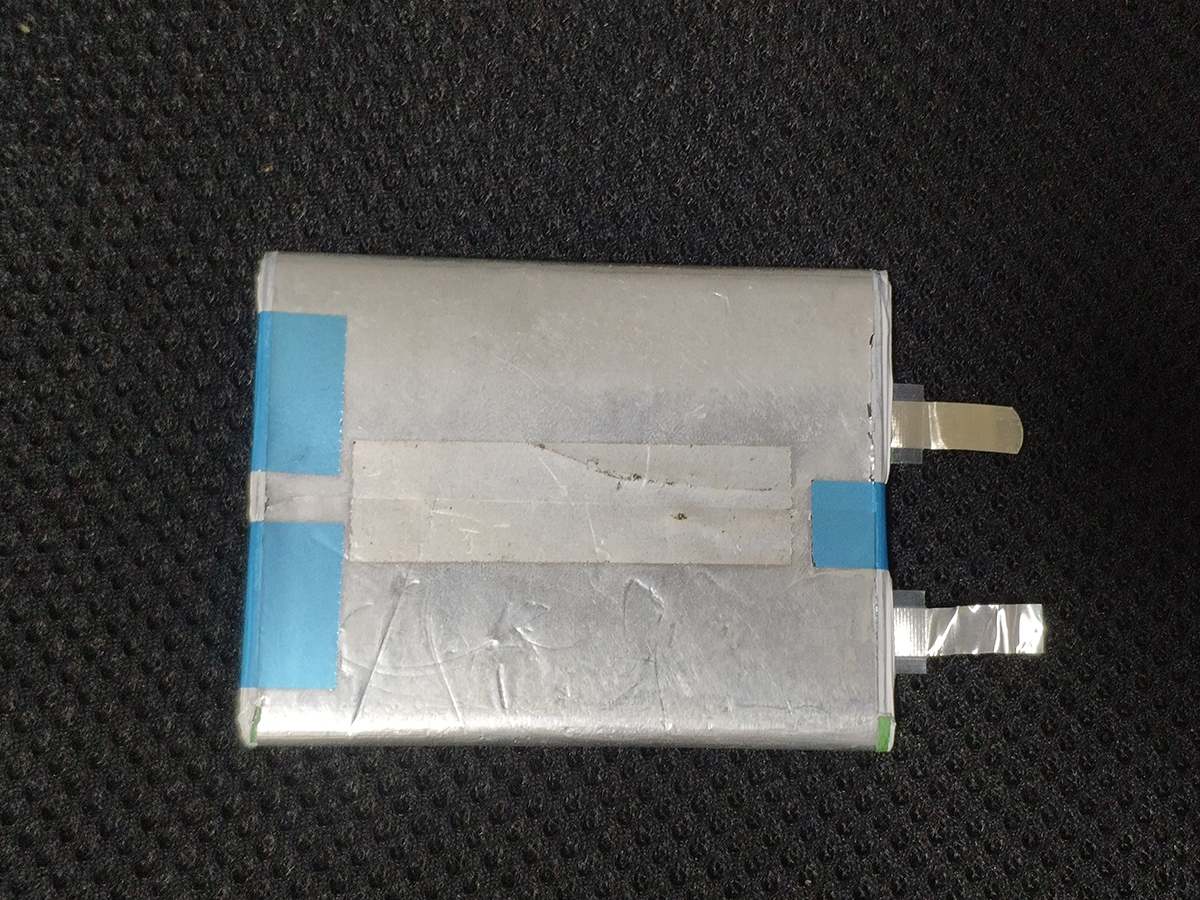
Object picture
Imaging system
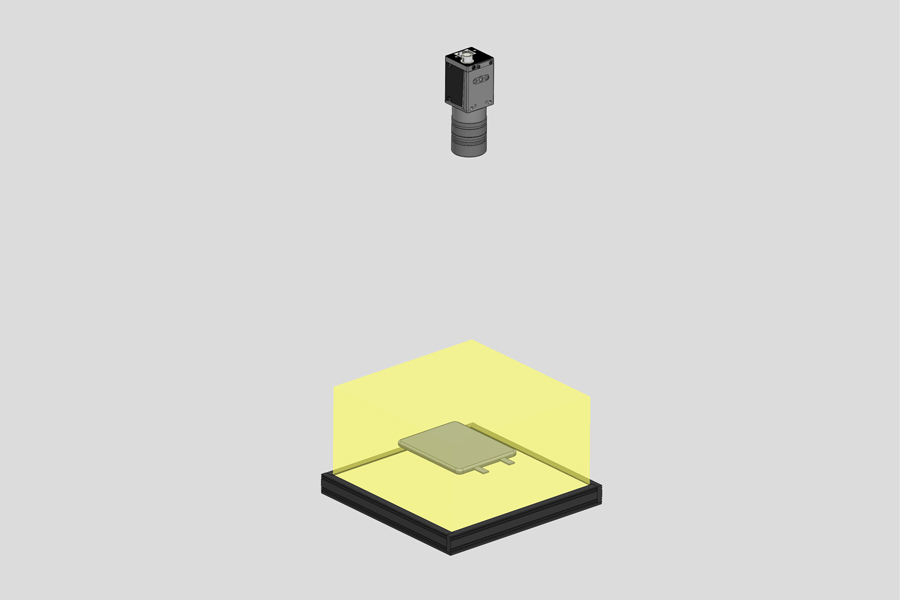
Telecentric collimated light |
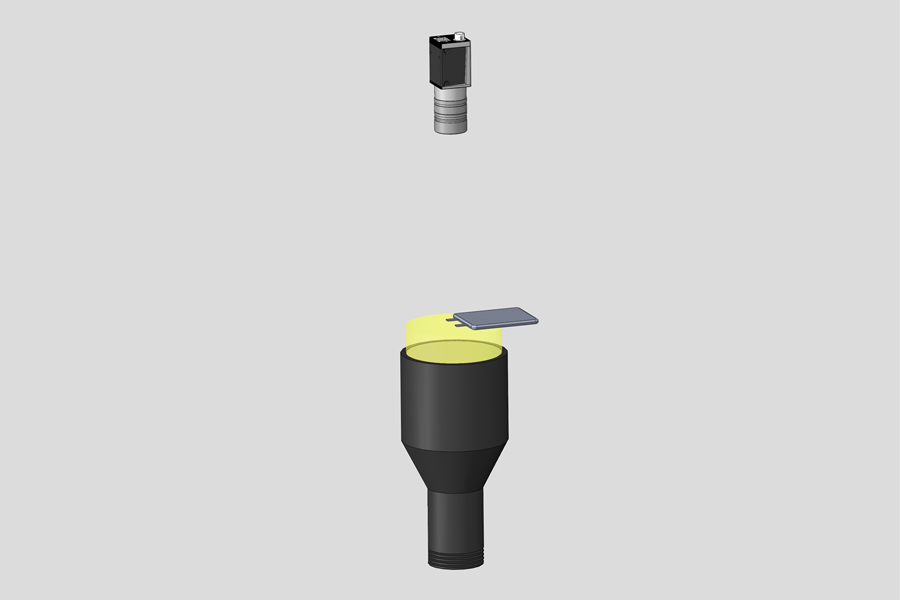
Telecentric collimated light |
Effect pictures
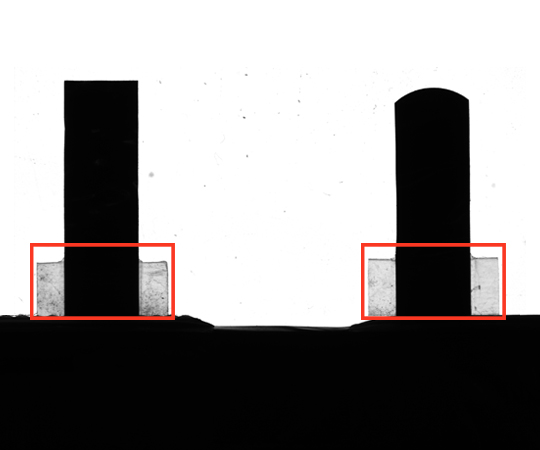
Collimated back light |
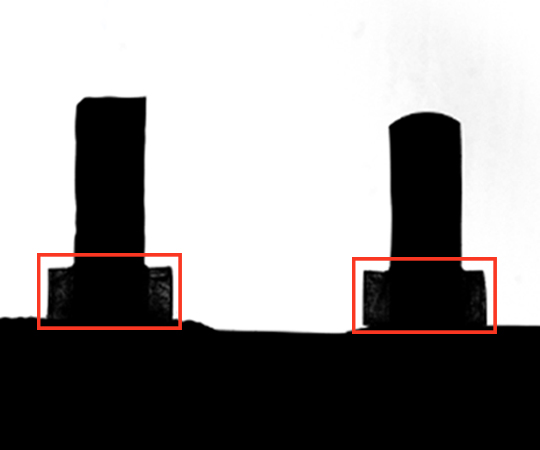
Telecentric collimated light |
Pic.1: When the light is collimated backlight, the outline of the battery TAB is distinct, while the outline of the film is relatively poor. The overall imaging of the product is clear.
Pic. 2: Use telecentric collimated light battery pole ear contour obviously, film outline is clear, relative than collimated back light, light higher parallelism, highly ear contour imaging effect is better.
The visual inspection technology for lithium battery tabs is the result of the intersection of multiple disciplines such as optics, mechanics, automation and artificial intelligence. It is not only a "visual organ" that replaces the human eye, but also a "data brain" that empowers intelligent manufacturing. With the breakthroughs in optical hardware and the continuous evolution of AI algorithms, the visual inspection of polar ears will develop towards higher precision, faster speed and lower over-kill rate, safeguarding the high-quality and high-safety manufacturing of lithium batteries. For visual engineers and lithium battery practitioners, only by deeply understanding the pain points of the process and adhering to the concept of "optical foundation, algorithm empowerment, and data closed loop" can they create truly outstanding inspection equipment in the fierce industry competition.



 Ms.Cici
 8618319014500